The operation in Venezuela and its ramifications for the MENA region
The American military operation of January 3, 2026 against Venezuela, resulting in the capture of President Nicolás Maduro and his wife Cilia Flores, constitutes far more than a regional Latin American event. This intervention, involving 150 aircraft taking off from 20 air bases and military ships and causing 100 deaths according to Venezuelan sources, marks a turning point in the global geopolitical order whose repercussions for the Middle East and North Africa (MENA) are profound and multidimensional.
Beyond the American official narrative centered on drug trafficking, this operation is part of a strategic reconfiguration that directly affects the interests, alliances, and structural vulnerabilities of the MENA region. From the dismantling of Hezbollah’s financing network to Sino-American rivalry for control of critical minerals, through the establishment of a worrying legal precedent, the intervention in Venezuela opens a new chapter in international relations whose scale MENA actors must assess.
This analysis examines the multifaceted implications of the Venezuelan operation for the MENA region, drawing on exhaustive documentation of official reactions, economic flows, and geopolitical dynamics at stake.
The Dismantling of the Venezuela-Iran-Hezbollah Strategic Triangle
The Architecture of an Alliance
Since Hugo Chávez’s rise to power in 1999, Venezuela has emerged as a strategic pillar of Iran’s and Hezbollah’s support network in the Western Hemisphere. This triangular relationship, consolidated over more than two decades, rests on three documented pillars.
First Pillar: Iran-Venezuela Economic Cooperation
Since the early 2000s, Iran and Venezuela have concluded several hundred cooperation agreements and memorandums, primarily in the sectors of energy (oil and gas), infrastructure, and industry. While there are nearly 300 agreements in total, their economic scope and the actual amount of investments vary widely. In 2020, facing American sanctions, Iran provided Venezuela with essential fuel deliveries, transported by five tankers that defied the American naval blockade. In return, according to Joseph M. Humire’s analysis in The Maduro Hezbollah Nexus: How Iran-backed Networks Prop up the Venezuelan Regime (2020), citing Bloomberg, Iran notably received nearly half a billion dollars (nine tons) of gold bars as payment.
Second Pillar: Military and Technological Infrastructure
In October 2020, the UN arms embargo against Iran came to an end, which, according to regional media, opened the door to weapons exports, including drones. Cited by Iran International in November 2020, certain Iranian media outlets claimed that images showed Nicolás Maduro with a drone presented as an Iranian Mohajer-6, and evoked a “possible transfer” of technology or equipment after the lifting of the embargo. On December 30, 2025, 4 days before Operation “Absolute Resolve,” images shared on social media appear to confirm that Venezuela has taken delivery of the Mohajer-6 drone, constituting recent public evidence of the existence of Iranian drone deployment within Venezuelan forces.
Third Pillar: The Hezbollah-Venezuela Nexus
Hezbollah developed a significant operational presence in Venezuela, particularly on Margarita Island which became, according to testimonies of American officials to Congress in 2011, a nerve center of operations surpassing in importance the traditional tri-border zone (Argentina-Paraguay-Brazil).
In 2017, CNN revealed that 173 Venezuelan passports had been issued to Hezbollah members from Venezuela’s embassy in Iraq, facilitating the international mobility of the organization’s cadres. Interior Minister Tareck El Aissami at the time, sanctioned by the American Treasury in 2017, allegedly played a central role in this infrastructure, receiving payments from Colombian and Mexican cartels in exchange for the use of Venezuelan airports, ports, and highways for drug transit.
The Financial Impact of the Rupture
Maduro’s capture comes at a critical moment for Hezbollah, which is experiencing its most acute period of vulnerability since its creation in 1982. The Venezuelan networks contributed substantially to the organization’s financing through several channels.
Money Laundering Networks
Operation Titan (2011) revealed connections between South American drug trafficking and Hezbollah financing, with financial flows estimated by American authorities at 200 million dollars monthly at their peak. Ayman Joumaa, a Lebanese-Colombian trafficker indicted in the United States in November 2011, led a network that laundered these sums through companies in Lebanon, Colombia, the United States, Mexico, Panama, and Venezuela.
The « Business Affairs Component »
Identified by the DEA as a division of Hezbollah’s external operations unit, this structure managed illicit activities of drug trafficking, cigarette trafficking, and money laundering. According to Brian Townsend, a DEA agent, “they launder money and provide networks that help cartels move funds across the Middle East.”
The Critical Timing
This financial loss occurs while:
- Iran, currently facing massive protests linked to economic stagnation, that quickly evolved into an openly anti-regime protest movement, sees its capacity to provide financial support to Hezbollah diminish substantially compared to the estimated 700 million dollars annually in 2018
- Hezbollah suffers the consequences of the elimination of Hassan Nasrallah in September 2024 and a large part of its leadership
- The Lebanese government, under the presidency of Joseph Aoun, approved the “Homeland Shield” plan in September 2025 aimed at disarming the organization
- According to UNIFIL Force, Israel has violated the ceasefire in effect with Lebanon more than 10,000 times since November 2024
Official Reactions from MENA: A Revealing Spectrum
Iran: Between Condemnation and Existential Concern
The Immediate Official Response
Iran’s Ministry of Foreign Affairs issued a statement condemning “the blatant violation of Venezuela’s national sovereignty and territorial integrity,” characterizing the American operation as “a serious violation of regional and international peace and security” whose “consequences affect the entire international system and will further expose the order based on the UN Charter to erosion and destruction.”
Veiled Threats
Ali Larijani, senior advisor to Supreme Leader Ali Khamenei, reacted on X by warning that “American intervention in Iran’s internal affairs would correspond to chaos throughout the region and the destruction of American interests,” referring to American military bases that Tehran could target, as it did in 2025 in Qatar.
Israel: Enthusiastic Support and an Indirect Message
The Official Welcome
Prime Minister Benjamin Netanyahu declared during the cabinet meeting: “I wish to express the full support of the entire government to the decision and determined action taken by President Trump and the United States to restore freedom and justice in this region of the world as well.”
Foreign Minister Gideon Sa’ar wrote on X: “Israel welcomes the removal of the dictator who ran a drug and terror network and hopes for the return of democracy to the country and friendly relations between states.”
The Message to Iran
More revealing still, Yair Lapid, leader of the Israeli opposition, posted a direct warning: “The regime in Iran should pay close attention to what is happening in Venezuela.” This message, published just days after Trump met with Netanyahu and threatened new strikes against Iran, explicitly draws a parallel between Maduro’s fate and what the Iranian regime could suffer.
Egypt and Arab Countries: Caution and Pragmatism
The Egyptian position
The Egyptian Ministry of Foreign Affairs issued a cautious statement indicating that it was “carefully monitoring the situation” and that it “would work to protect Egyptian nationals living in Venezuela.” Deputy Foreign Minister Haddad El-Gohary advised the Egyptian community in the country to comply with all laws and to contact the embassy in case of risk.
This measured reaction reflects Egypt’s delicate position, which maintains close relations with Washington while seeking to preserve a non-aligned stance on issues of state sovereignty.
The deliberate silence of the Gulf
Notably, Saudi Arabia and the United Arab Emirates issued no public condemnation of the American operation. This silence contrasts sharply with the reactions of many Latin American and European countries, and reveals several dynamics:
- Strategic alignment with Washington: The Gulf monarchies, particularly in the face of the Iranian threat, prioritize their security partnership with the United States
- Reinforcement of negotiating leverage with Washington: Venezuela’s ongoing instability increases American dependence on the reliability of Gulf producers to govern without crisis. Riyadh and Abu Dhabi can thus transform their role as market stabilizers into diplomatic leverage
- Rivalry with Iran: The weakening of a key Tehran ally serves the regional geopolitical interests of the Gulf monarchies
Tensions between Saudi Arabia and the UAE
It should be noted that the operation in Venezuela coincides with a public crisis between Riyadh and Abu Dhabi over Yemen. On December 30, 2025, Saudi forces intercepted a shipment of weapons linked to the UAE destined for southern Yemen, followed by an airstrike on the port of Mukalla causing 7 deaths. Despite tensions and low Venezuelan production, OPEC+ confirmed that the alliance would maintain stable production in the first quarter of 2026, demonstrating that cohesion on energy issues prevails over regional disagreements.
The energy and mineral dimension: Structural challenges for the MENA region
The Venezuelan paradox: Massive reserves, negligible production
The gap between potential and reality
Venezuela holds the world’s largest proven oil reserves, estimated at 303 billion barrels, representing approximately 17% of the global total and more than Saudi Arabia (more than 260 billion barrels). Yet Venezuelan production stood at only 934,000 barrels per day in November 2025 according to OPEC, representing less than 1% of global demand, compared to more than 3 million barrels per day in the late 1990s.
This decline results from decades of mismanagement, politicization of the industry, and chronic underinvestment. Under Chávez, PDVSA (the national oil company) was purged of its technical experts and used as an instrument for revenue extraction without adequate reinvestment. American sanctions, intensified since 2019, accelerated and deepened this decline by restricting access to financing, operations, and markets.
The Muted Market Reaction
Contrary to initial anticipations, oil prices fell after the American operation. Brent retreated to around 60 dollars per barrel, while West Texas Intermediate (WTI) fell below the 58 dollar threshold. This apparently counterintuitive reaction is explained by a context of structural oversupply: the growth in non-OPEC production, notably in the United States, Brazil, Guyana, and Argentina, continues to feed the market. Meanwhile, despite the maintenance of certain voluntary reductions by OPEC+ members, global supply remains abundant. According to projections from the International Energy Agency, the oil market could experience a significant surplus in 2026, with global supply exceeding demand by the order of 1 to 2 million barrels per day depending on scenarios.
Long-term implications for MENA producers
The reconfiguration of the oil market
Carole Nakhle, CEO of Crystol Energy, observes that “a rapid recovery in production was unlikely in the short term. Current efforts are focusing on stabilizing existing production. Any significant growth would require sustained capital, technology transfers, and institutional reforms, which take time to implement.”
The reconstruction of Venezuela’s oil industry would require a decade and hundreds of billions of dollars in investment. U.S. Energy Secretary Chris Wright met with oil executives on January 7 and 8 in Miami at the Goldman Sachs Energy, CleanTech & Utilities to discuss reviving extraction operations in Venezuela, with Chevron having already committed to investing “billions” according to Trump’s statements.
The Strategic Objective: Structurally Weakening OPEC+
In the long term, some analysts believe that the gradual return of Venezuelan oil to the market could have geopolitical significance beyond the mere question of supply. While not constituting a weapon capable of causing a sharp price collapse, these new volumes would add to an already abundant global supply, complicating OPEC+’s capacity — dominated by Saudi Arabia and Russia — to maintain effective quota discipline.
For the United States, which is not part of the agreement, the issue would not be to provoke a price collapse, but to progressively reduce OPEC+’s market power. In this framework, Venezuela appears as a potentially malleable producer, dependent on access to Western markets, and whose rise in power could, in the long term, limit the room for maneuver of major Gulf producers and Moscow.
That said, even in optimistic scenarios, Venezuelan production would remain insufficient to fundamentally alter the global balance on its own. As Cornelia Meyer, president of LBV Asset Management, points out, the production scale of countries like Saudi Arabia or Iraq remains beyond Venezuela’s reach in any foreseeable future, which puts this dynamic into perspective.
What Matters More: The Political Precedent
Nakhle warns that instability, rather than oil supply, constitutes the real risk. “Markets can handle Venezuelan barrels. They cannot easily assess prolonged political disorder.” Interventions in Iraq and Libya triggered long-term instability that reverberated across the region. Venezuela, with a population of 30 million inhabitants, risks a similar fate.
The silent war for rare earth minerals
China's Achilles heel
Beyond the oil issue, the Venezuelan dynamic is also part of a strategic rivalry between the United States and China over critical raw materials. Venezuela possesses vast mining potential in the Orinoco Mining Arc (more than 110,000 km²), identified as rich in gold, bauxite, and coltan, and potentially bearing rare earths, although the latter have not yet been subject to significant industrial exploitation or reliable public estimates. On the global rare earth market, China dominates overwhelmingly, representing approximately 70% of mining production and controlling nearly 90% of the refining capacities of these metals essential to electronics and advanced technologies, while the United States imports a large portion of its needs.
This rivalry is already reflected in the energy sector. While Venezuelan exports to China have declined recently, Beijing remains an important buyer: imports of Venezuelan crude to China reached approximately 470,000 barrels per day in 2025, representing nearly 4.5% of China’s total maritime oil imports. Energy ties are accompanied by Chinese investments in Venezuela’s oil sector, which have been valued at several billion dollars since 2016, although this figure falls well short of often-cited estimates of tens of billions. In this context, Washington views access to these resources — both petroleum and mineral — as a long-term element to reduce strategic dependence on supply chains dominated by Beijing.
The implication for the MENA region
This dimension of Sino-American rivalry has direct implications for the Middle East:
- Pressure on petroleum exports to China: Without Venezuelan oil at reduced prices, China will need to increase imports from Russia and the Middle East, which will be more costly. Saudi Arabia currently supplies 14–21% of China’s total petroleum imports. The kingdom is trying to leverage both superpowers by playing its security (assured by the United States) and its growing economic ties with China, particularly in the energy sector.
- Competition for critical minerals: Several MENA countries possess their own strategic mineral deposits. Saudi Arabia has announced significant discoveries of lithium and rare earths, while Morocco controls at least 70% of the world’s phosphate reserves. The reconfiguration of supply chains could offer new opportunities for MENA producers.
- The precedent of intervention for resources: If Washington establishes a precedent where control of strategic resources justifies military intervention, this creates a potential vulnerability for all resource-rich states, including in the MENA region.
Legal precedent and its normative implications
The flagrant violation of international law
Immunity of Heads of State
The legal framework leaves no room for ambiguity: the operation constitutes a blatant violation of international law. The United Nations Charter explicitly prohibits the threat or use of force against the territorial integrity or political independence of any state (Article 2, paragraph 4). Heads of state in office enjoy absolute immunity from arrest and prosecution by foreign states.
The UN's response
UN Secretary-General António Guterres stated at an emergency Security Council meeting on January 5 that he was “deeply alarmed” and emphasized that “respect for international law must remain the guiding principle,” expressing his concern that the rules governing the use of force “were not respected” in the January 3 military action.
U.S. Ambassador to the UN Mike Waltz attempted to justify the operation by claiming that “this is not an occupation of a country” but rather “a law enforcement operation within the framework of indictments that have existed for decades.” This argument, rejected by the majority of Security Council members, including American allies, illustrates the legal fragility of the intervention.
The Implications for MENA
Regional Concern in MENA
For MENA leaders, the Venezuelan operation establishes a troubling precedent. Nicolás Maduro Guerra, son of the captured president, expressed this concern during his first public speech on January 5 before the Venezuelan Parliament: “If we normalize the abduction of a head of state, no country is safe. Today it is Venezuela. Tomorrow, it could be any nation that refuses to submit. This is not a regional problem. It is a direct threat to global political stability.”
Specific MENA Vulnerabilities
Several factors make the region particularly sensitive to this precedent:
- Sanctioned leaders: Several MENA heads of state and officials are subject to American sanctions and indictments, creating a potential legal justification similar to that invoked for Maduro.
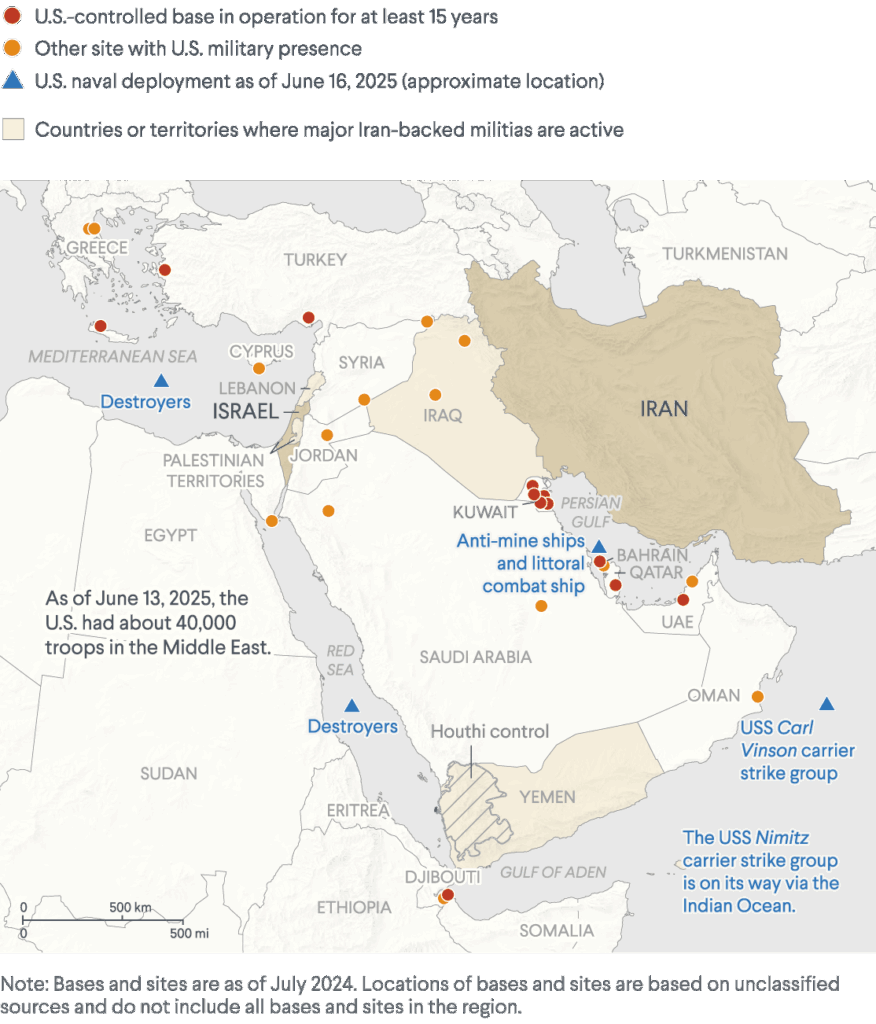
- American military presence: Unlike Latin America, MENA hosts multiple American military bases, offering immediate force projection capability.
- Preemptive doctrine: The Trump administration explicitly stated in its 2025 National Security Strategy its intention to act unilaterally against perceived threats, rejecting “global hegemony for America First realism.”
- The Iranian precedent in particular: Iran illustrates American capacity to directly target a regime and its leaders through a combination of extraterritorial sanctions, covert actions, and targeted strikes, as demonstrated by the elimination of General Qassem Soleimani in 2020. This precedent demonstrates that Washington does not hesitate to assume direct use of force against state figures under sanctions when deemed threatening.
The Reconfiguration of Alliances and the Erosion of Multilateral Order
China: Between condemnation and strategic recalculation
Beijing's official response
China vigorously condemned the American operation, adding “No country can act as the world’s police, nor claim to be the international judge.”
Chinese state media presented the intervention as a validation of their criticisms of American unilateralism, as Beijing seeks to position itself as the true champion of the international rules-based order.
Economic Interests at Stake
For China, Venezuela represents far more than a mere ideological ally. Since 2007, Beijing has committed cumulative amounts potentially reaching nearly 60 billion dollars in the form of oil-backed loans, making Venezuela one of its principal energy debtors in Latin America. While these sums are more akin to financing mechanisms than direct investments, they nonetheless expose China to a major strategic risk in the event of a lasting disruption of oil flows or political change in Caracas.
The impact on the MENA region
The loss of Chinese influence in Venezuela could push Beijing to intensify its investments elsewhere, notably in the Middle East where China has already established a significant presence.
The region already constitutes a pillar of Chinese economic projection, notably through the Belt and Road Initiative, which has concentrated tens of billions of dollars in investments in infrastructure and energy within MENA in recent years.
This presence has also translated into a rise in diplomatic power, illustrated by China’s role as mediator in the rapprochement between Saudi Arabia and Iran in March 2023. In parallel, Beijing has consolidated its energy partnerships with Iraq, Iran — via a long-term strategic cooperation agreement worth 400 billion dollars signed in 2021 — and the Gulf monarchies. Together, these dynamics make the Middle East a key zone of strategic compensation for China in the face of growing uncertainties in Latin America.
Russia: A powerless ally
The failure of protection
The collapse of Maduro’s regime, despite political and military support from Vladimir Putin, raises crucial questions about Moscow’s capacity to protect its allies. This failure echoes the fall of Bashar Al-Assad in Syria (December 2024), where Russian air defense systems proved unable to impose decisive effects against Israeli and American strikes.
Lessons for the MENA region
For Russia’s regional allies, notably post-Assad Syria, Iran, or Algeria, Russian impotence in Venezuela sends a troubling message. The Pantsir, Buk, and S-300/400 systems that equip several MENA armies have demonstrated their vulnerabilities against modern intelligence-surveillance-reconnaissance cycles and precision strikes.
A historical ally of Russia and heavily equipped with Russian armaments, Algeria is closely observing the revealed limits of Moscow’s protection offered to its partners. Without breaking its strategic alignment, Algiers appears to favor a more cautious and flexible approach, attentive to the evolution of power dynamics. Having not publicly condemned the American operation in Venezuela, even though Caracas was an affirmed political partner, this silence, which can be described as a “discrete strategy,” reflects a willingness to avoid confronting Washington. President Tebboune’s statement that “one must not be more Sahrawi than the Sahrawis” illustrates this recalibration logic: maintenance of principles, but reduction of direct political exposure. In a context where Russian security credibility is questioned, Algeria appears to be seeking to preserve its strategic room for maneuver rather than lock itself into rigid commitments.
The fragmentation of the Global South
Latin American condemnations
Brazil, Colombia, Mexico, Uruguay, Chile, and Spain issued a joint statement on January 4 expressing their “deep concern and firm rejection of unilateral military actions carried out on Venezuelan territory” by the United States.
Colombian President Gustavo Petro even warned that he was “ready to take up arms if necessary” to defend regional sovereignty, deploying military forces to the Venezuelan border. Brazilian President Lula da Silva called the operation a “very serious affront to Venezuela’s sovereignty and an extremely dangerous precedent for the entire international community.”
Implications for MENA coalitions
This fracture exposes the limits of attempts to build coalitions of Global South states in opposition to Western hegemony. MENA countries that participated in the expansion of BRICS (notably Egypt, Iran, the UAE, and Saudi Arabia admitted in 2024) must recalculate the benefits and risks of these alignments in the face of an American administration willing to use military force unilaterally.
The specific vulnerabilities of actors in the MENA region
Iran: In the crosshairs
The accumulation of vulnerability factors
The Venezuelan operation comes as Iran faces an unprecedented conjunction of pressures:
- Crisis of ideological legitimacy: The collapse of the “Shiite crescent” (Syria), the weakening of Hezbollah, and the defeat in the 12-day war with Israel have eroded the ideological foundations of the regime
- Ecological crisis: The water crisis fuels years of protest movements without an easy solution
- Economic crisis: The January 2026 protests over economic difficulties represent the most recent expression of structural discontent
- Succession crisis: The advanced age of Supreme Leader Ali Khamenei and questions surrounding his succession create political uncertainty
Trump's explicit threats
On Friday, January 2, 2026, Trump threatened to intervene in Iran in support of protesters: “If Iran shoots and violently kills peaceful protesters, which is their custom, the United States of America will come to their rescue.” Lapid’s message after the Venezuelan operation (“The regime in Iran should pay close attention to what is happening in Venezuela”) made this threat explicit.
The Gulf oil states: Between opportunity and risk
Opportunities
- Replacement of Venezuelan barrels: In the short and medium term, Venezuelan uncertainty could benefit Gulf producers by maintaining higher prices
- Reinforcement of negotiating leverage with Washington: Venezuela’s sustained instability increases American dependence on the reliability of Gulf producers to govern without crisis. Riyadh and Abu Dhabi can thus transform their role as market stabilizers into diplomatic leverage
- Weakening of Iran: The loss of a key ally reduces Iranian projection capacity
Risks
- Future strategic overproduction: The massive return of Venezuelan oil in 5-10 years could crash prices, a scenario that even Gulf monarchies would not control
- Interventionist precedent: Direct American control over a sovereign state’s petroleum resources establishes a troubling precedent
- Forced alignment: Pressure to choose between Washington and Beijing in the rivalry for resources intensifies
- Rising regional actors: Tensions between Saudi Arabia and the United Arab Emirates compromise the stability and influence capabilities of Gulf monarchies in the region. Iran’s weakening, perceived as an opportunity, can transform into a risk if Gulf oil states fail to structure the regional transition. In this case, the strategic vacuum could be exploited by more assertive actors such as Israel or Turkey, but also by transnational insurgent groups — notably in the Khorasan area — whose objective is not stabilization, but lasting destabilization of regional balances.
States in transition: Syria, Libya, Yemen
Post-Assad Syria
The new Syrian president, Ahmed Al-Sharaa, faces a delicate situation. Trump has shown a willingness to quickly lift sanctions on leaders who cooperate (such as the Syrian sanctions) but also to intervene militarily against those who resist.
Lessons for fragile states
MENA states undergoing political transitions must carefully calibrate their positioning. The Venezuelan operation demonstrates that Russian or Chinese protection is not a guarantee against American intervention, the qualification of “narco-terrorist state” or “rogue state” can legally justify (from the American perspective) military action, regional allies can choose silence rather than solidarity in the face of intervention.
Implications for multilateral architecture
The impotence of the Security Council
Institutional paralysis
The emergency Security Council meeting on January 5 exposed the structural limitations of the multilateral order. Despite Secretary-General Guterres’s condemnation and calls from many member states, the Council proved unable to adopt a resolution condemning American action or calling for respect for international law, due to the guaranteed American veto.
The precedent for future operations
The absence of institutional consequences for the Venezuelan intervention establishes a dangerous precedent. The permanent members of the Security Council (United States, Russia, China, France, United Kingdom) are already exempt from accountability for their military actions thanks to the veto right. The Venezuelan operation further normalizes the unilateralism of great powers.
The erosion of sovereignty standards
The perverted doctrine of responsibility to protect (R2P)
The intervention in Venezuela cannot be justified under the R2P doctrine, which authorizes international intervention only to prevent mass atrocities (genocide, crimes against humanity, war crimes, ethnic cleansing). Yet American rhetoric about the “liberation” of the Venezuelan people borrows from humanitarian language while pursuing geopolitical and economic objectives.
Implications for conflicts in the MENA region
This perversion of humanitarian justifications complicates legitimate efforts to intervene in regional crises. Potential interventions in Libya or Sudan for humanitarian reasons lose credibility, autocratic MENA states can point to Venezuela to reject any international criticism, the legitimacy of the International Criminal Court and other international justice mechanisms is weakened.
A turning point for regional and global order
The American military operation in Venezuela on January 3, 2026 marks far more than a turning point in Western hemispheric relations. For the Middle East and North Africa, this event catalyzes several transformative dynamics that will redefine the region’s geopolitical architecture for years to come.
Three conclusions impose themselves with certainty:
First, the Venezuela-Iran-Hezbollah strategic triangle, built over more than two decades, has suffered a possibly fatal blow. The loss of South American financing networks, Venezuelan diplomatic passports, and the operational base on Margarita Island will durably weaken Hezbollah’s capacities even as the organization traverses its most acute period of vulnerability. For Iran, already confronted with the collapse of the “Shiite crescent” with Assad’s fall, the loss of Venezuela accentuates growing strategic isolation.
Second, the legal precedent established normalizes a form of unilateral interventionism that erodes the fundamental principles of state sovereignty enshrined in the United Nations Charter. The immunity of heads of state, a cornerstone of international law since the Treaty of Westphalia of 1648, has been flagrantly violated. For MENA leaders, notably in Iran, this new reality imposes a strategic recalculation: neither international law, nor the protection of Russian or Chinese allies constitute reliable guarantees against American military action.
Third, Sino-American rivalry for control of strategic resources, both petroleum and mineral, has intensified in a manner that directly affects the economic calculations of MENA states. The anticipated potential American control over Venezuela’s 303 billion barrels of oil reserves and the critical mineral deposits of the Orinoco Mining Arc repositions the United States in global geo-economic competition, with repercussions for Gulf petroleum exporters and Chinese supply strategies that pass through the region.
Several dynamics remain unpredictable and require careful monitoring:
The resilience or collapse of Venezuela’s institutional order will determine whether American intervention creates a managed transition or prolonged chaos similar to post-2011 Libya. In the latter case, validation of regional fears regarding American interventions as vectors of destabilization rather than stability would significantly complicate American diplomacy in MENA.
Iranian reaction to cumulative pressures — loss of allies, internal protests, explicit Trump threats — could take several forms, from accommodation to desperate escalation. The critical time window from May 2026 (Lebanese legislative elections) to January 2027 will be crucial in determining whether Tehran accepts gradual disarmament of Hezbollah or attempts a show of force to preserve its regional influence.
The evolution of global energy architecture over a 5 to 10-year horizon, with the potential return of significant Venezuelan barrels to the market, could structurally weaken OPEC+ and transform the budgetary calculations of Gulf petroleum monarchies that depend on high oil prices for their economic diversification programs (Saudi Vision 2030, Abu Dhabi Plan 2030).
Strategic lessons for MENA stakeholders
States in the region must integrate several lessons from the Venezuelan operation into their strategic planning:
- Multipolarity is not synonymous with protection: The presence of Russian, Chinese, or Global South allies offers no guarantee against unilateral American military action
- Strategic resources create vulnerabilities: Control of massive petroleum reserves or critical minerals can become a factor for intervention rather than a diplomatic asset
- Transnational networks are vulnerable: Connections between state and non-state actors across continents (such as the Venezuela-Iran-Hezbollah triangle) can be dismantled by targeted actions
- Multilateral architecture is weakened: The Security Council and other international institutions no longer offer effective protection against unilateral actions by great powers
- Pragmatism takes precedence over ideology: Gulf monarchies, Algeria chose silence rather than solidarity with Venezuela, prioritizing their strategic interests
A window of turbulence
The operation in Venezuela is part of a period of global geopolitical turbulence where the established rules of the post-Cold War international order are disintegrating without a new coherent framework having emerged to replace them. For MENA, a region already traversed by multiple conflicts and transitions (Syria, Libya, Yemen, Sudan), this instability creates both risks and opportunities.
Regional actors who can navigate this period with pragmatism, by diversifying their partnerships, maintaining strategic flexibility, and avoiding ideological rigidities, will be better positioned to prosper. Those who continue to rely on fixed alliances or protection from international law risk suffering Maduro’s fate: captured by forces they believed they could repel, taken to jurisdictions they thought were beyond reach.
The history of the 21st century is being written in these moments where unilateral audacity defies established norms, and where the silence of the international community validates new precedents. Venezuela in 2026, like Iraq in 2003 or Libya in 2011, will probably become a point of reference in future debates on sovereignty, intervention, and world order. For MENA states, understanding and anticipating the implications of this turning point is an urgent strategic necessity.


Related Posts